Friday, April 8, 2022

EOTO: The Telegraph

When you're driving down the road you probably don't even notice the wires running above and beside the roads because they've been there your entire life. But there was a time when those wires were a novelty to the average traveller. These wires weren't just for powering homes and buildings, but for the increasing network of telegraphs. Before radio, and even telephones, the telegraph laid the groundwork for the connectivity of the United States. 

History

While Samuel Morse might be most known for his invention of the Morse Code, the electric telegraph is responsible for the widespread use of it. Invented and patented in 1837, the electrical telegraph revolutionized long distance communication. An operator would tap a key, using Morse Code, to break and make a connection between the telegraph's battery and receiver to send a message as electrical pulses along wires to another telegraph where the electrical pulses would control a stylus to write out the message in Morse Code. The first long distance use of the telegraph was from Washington D.C. to Baltimore, Maryland in 1843, with the message stating "What hath God wrought!"

As the amount of telegraph lines increased, so did the number of telegraph companies. Telegraph companies were who people would go to to send and receive telegraphs as they were the only ones with the machinery needed and direct access to the lines. The most dominant company was the Western Union Telegraph Company, which is still running today, but as a financial services company. Western Union was created when a number of telegraph companies were consolidated into one corporation in 1856. The first transcontinental telegraph line was completed in 1861, going from San Fransisco, California to the Midwest and connecting to the East Coast. It was later moved in 1869 to run alongside the Union Pacific Railroad to allow for maintenance to be completed easier and quicker when needed. 


The major uses of the telegraph came from journalists and military officials. Journalism accounted for a large amount of use of telegraphs as news organizations could now receive news from their correspondents in the same day. This dramatically increased the use and importance of correspondents in journalism. The Associated Press (A.P.) was originally formed by 5 separate news outlets in New York in 1846 as a way to share the information from telegrams and pay a telegraph company once and split the costs. It had similar effects in the military as well in regards to the messages increased speed of travel. Allowing generals on both sides to talk to their colleagues while on completely different fronts of wars. It was heavily used by President Lincoln in the Civil War, to the point he would sleep on a cot in the telegraph office during key battles. Lincoln used the telegraph to receive war updates or tell his generals to strike if he wasn't happy with the progress. 

In 1871, the duplex transmission was introduced by J.B. Stearns, allowing for 2 messages to be sent or received on a single wire, and later in 1874, Edison invented the Quadruplex transmission system allowing for a single wire to send or receive 4 different signals. Allowing for a wider bandwidth on the telegraph lines all over the country. When the telephone was invented, by Alexander Graham Bell, it was expected to kill the telegraph, but in reality they coexisted for many years, as new technology for the telephone could be implemented on the telegraph. Such as simultaneous communication for telegraphs and telephones on the same wire, and the vacuum tube. The vacuum tube allowed for amplification of weaker signals on wires that travel longer distances. 

The end of the telegraph era came after World War II, because the older wires became too expensive to repair and were replaced by coaxial cables and microwave links. These new wires that had even more bandwidth for different signals, with their capabilities only being limited by the extents of the equipment sending the signals. 

The Impact of the Telegraph

The telegraph was the first ever form of electrical communication, laying the groundwork for every other type of electrical communication since then. In its time the telegraph decreased travel time of messages so drastically it ended the Pony Express industry, in addition the messages were a lot more secure traveling on the wires than on a horse. It also helped facilitate railway construction, because management at building sites could communicate with their bosses easier and vice versa, so they can update the workers if needed. It also created a lot of jobs across the country through the telegraph companies popping up in new towns, and giving reason to populate those towns. The travel time decrease also allowed for breaking news on one side of the country to reach the other side almost daily. The role of correspondents skyrocketed because of this as they could now be spread out even further across the country and keep their publishers up to date. In addition, it allowed for generals to communicate plans, troop advancements, and reports to each other in a much faster and secure way. 

While the telegraph had many advantages, there were also disadvantages from its use. The communication quality was very poor, especially compared to later communication techniques, as Morse Code is tedious to translate and not everyone was able to do it. There is the view that the telegraph forced the north and south regions of the country to del with the views each side on issues in society, the future of the country, and how that future should look, helping to push America towards civil war. 

AI and the Implications


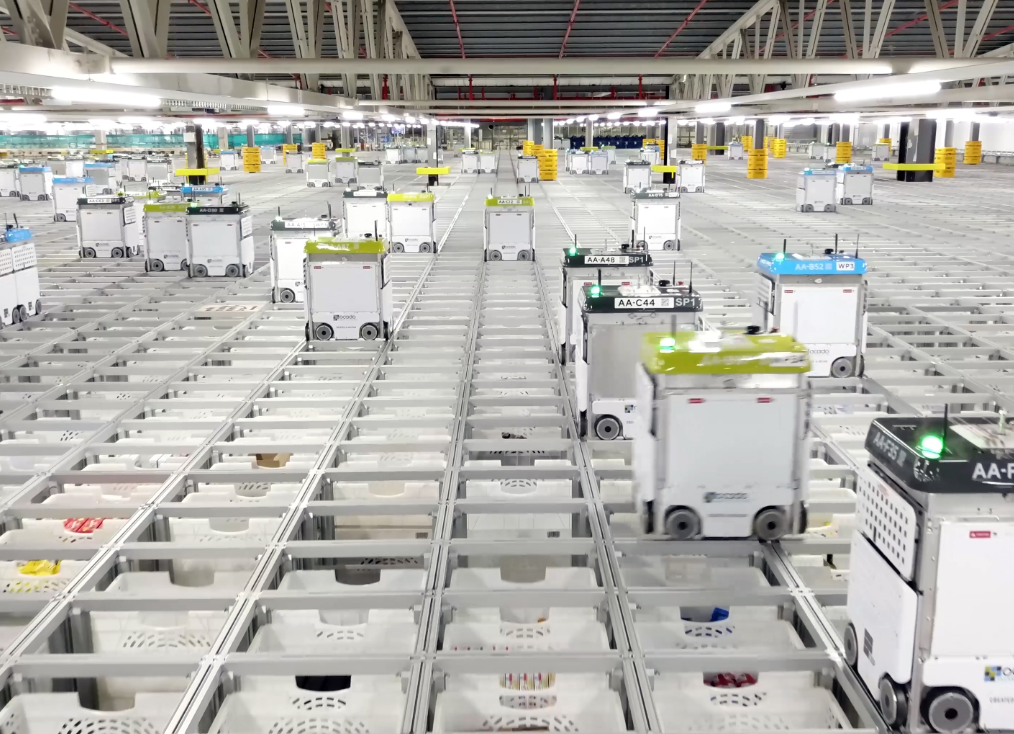
Artificial intelligence is still in its infancy of its uses and potential, but it already has caused waves of concern in the public mind in recent years. Artificial intelligence is beginning to enter to more and more aspects of people's lives, through Amazon's Alexa, Siri, automated appliances, and the emergence of self-driving cars. As we see in the documentary, In the Age of AI, robots and artificial intelligence have become more of a staple in warehouse and manufacturing jobs across the country. But we are not alone in the rise of artificial intelligence as China is becoming more of an electronic superpower.


A major cause for the increase of automation is productivity speed and efficiency, leaving few job areas in the safe zone. Any job type that can find a way to maximize efficiency is vulnerable to automation, including transportation, finance, human resources, fast food, and manufacturing. Already, we are seeing an increase in robotics being used manufacturing jobs in America, taking away jobs from people in large numbers at a time, even though management claims this opens up more jobs in other areas, but the workers being laid off aren't finding other opportunities within those companies. Automation is being regarded as a "silent killer" as the job loss from it has been linked to disease, depression, and suicide up to 20 years after job loss, and it can also affect their children, as they are more likely to fall behind academically. Additionally, the jobs that are being taken over by automation often times more likely to be jobs completely by mainly women. 

This type of workforce revolution is now being followed by a type of surveillance capitalism in which artificial intelligence claims private human experiences to better predict human behavior for free. Wherever you go online, you leave digital footprints for the A.I. and tech companies to use and store. Google, in its early years, was the first to implement a system for tailoring ads for individuals based on their searches and web history, and they were able to make their profits skyrocket, and keep it hidden from the public, until they decided to go public. Tech companies like Google do not always care for the individual outside of gathering their data, so those that do collect data on people will not always use it with the best intentions. In recent years there has been legislation to protect the individual, including the Right to know and the Right to say no. The former allowing an individual to ask a company for the data on that person from the last year, and receive it, and the latter allowing a person to stop a website or company from collecting data on them.


On the other side of the globe, China has been building a surveillance state for years along with artificial intelligence improvements. In China we have found they use A.I. as a way to survey for any signs of unrest, using more than 6 million cameras in the year this documentary was released, 2019. One of these programs is the Sharp Eyes program, which has cameras on every street corner to recognize faces and actions. It also gives out tickets through its use of facial recognition and license plate recognition. Another part of this surveillance initiative is to find the citizens they believe to be a risk of committing treason or terrorism and to give them a "political re-education".  In China there is a region that is home to a number of Turkic Muslims, who have been the target of intense monitoring and unlawful imprisonment as a result of A.I. Their greatest ambition for surveillance is the Belt and Road initiative. An effort to extend Chinese control all over the world through financial support, for example funding a stadium, to different countries to increase their levels and potency of surveillance.

Saturday, March 26, 2022

Why We Have the First Amendment


The First Amendment is arguably the most important addition to the Bill of Rights as it set the United States apart from the rest of the world's governments at the time. It gave its citizens freedoms from being tied to religions, petitioning the government, to publish their thoughts without censorship, and most importantly, freedom of speech. Freedom of speech allows for the expression of most any ideas people may have, without fear of punishment or censorship from the government. While there is speech that is frowned upon by our society it is just as necessary as acceptable speech and should be protected equally.

A country that allows all speech to be heard it allows for society to grow and learn from its mistakes and what is and isn't socially acceptable, the First Amendment is very key in "Promoting Tolerance" with this. This is a very difficult concept for many to understand in today's society, especially on social media. We see celebrities being canceled by society for what they have said in the past that are not acceptable in today's standards of speech and things they have said today that are not looked on with a positive light. Cancel culture is a very extreme way of trying to teach society what is acceptable, but in its basic format it's exactly how society should operate and learn. 
 

In 2020, author J.K. Rowling tweeted multiple tweets about her view on the trans community, and was met with instant backlash and continued ridicule for comments she has not yet relented on. When this occurred, people used this opportunity to teach the masses in order to help the wider society better understand the trans community and what people might not have known. This is a rare example of cancel culture achieving this goal of helping society understand what the norms of our acceptable speech have become. Rowling's original tweets have not been taken down as they are protected, because Twitter is an American company, and it serves as a reminder of what unacceptable speech is today. But in most cases, cancel culture does not work like this or teach our society new ways to act. As we saw in 2018, when actor/comedian Kevin Hart was chosen to host the Oscars, old tweets of his resurfaced of him using homophobic language. These tweets were from 2009 to 2011, and Hart has since apologized for his tweets many times, but this is not the way we should use hateful speech to grow into a better society. Hart tweeted these things in a time where it wasn't great to say what he did, but it wasn't damning for people to say this like it is today. We as a society know what he tweeted is not socially acceptable today, but we can't learn and grow our understanding of acceptable speech by applying today's standards to yesterday's society. We need to allow speech we don't agree with to be heard in order to know what is socially acceptable.

The First Amendment not only protects the speech deemed socially acceptable by the general public, but also to "Protect Dissent". That's why there are so many political Facebook pages, Twitter profiles, YouTube channels, and websites that are considered very outlandish and conspiratorial, but are allowed to exist because it falls under the protection of free speech. While these opinions are not a part of the majority in most cases they are allowed because our government's power rests in the "consent of the governed". The government only has power because its people allow it and recognize its legitimacy. The people are almost encouraged to voice their opinions on the government to allow it to better govern in a way that benefits all. In addition to speech criticizing the government being protected, the same goes for speech against other people or groups. Anyone can publicly disagree with an organization/person for valid reasons and be protected by the First Amendment. For example, Tucker Carlson can disagree with the majority opinion on intervening in Ukraine with valid reasoning and not face serious consequences because of the First Amendment. We need to allow people to voice opinions that are against the majority because we cannot live in a society only seeing one side of each story.


Friday, March 25, 2022

The Supreme Court

Being one of the most respected and powerful judiciary groups in world, the Supreme Court holds massive influence over every aspect of our government. Their decisions having ripple effects in cases all over the country in any level of court or governing body, and in cases for decades or even centuries to come. The 9 judges on the court are appointed to determine the constitutionality of not only cases in lower and appellate courts, but also in the actions of the the legislative and executive branches of the federal government. While it isn't the most eventful or flashy aspects of our government, the results and decisions have shaped American democracy and life. 


In the reference video and its 2nd part, it gives a brief and insightful overview as to how the Supreme Court operates, from receiving cases, to how those chosen are argued on the court floor. The Supreme Court does not function like a local or state court would. Instead of hearing any case, few are chosen by the judges from thousands of letters each year for review. When the judges do hear a case in court, it also is not like other court proceedings. Each attorney is given 30 minutes to argue their case to the panel and answer the questions the judges may have about the case. The 9 judges then go into a conference room, alone, and deliberate on their decision and vote. Once a majority has agreed on a decision, a judge is required to write the opinion of the Court on the case summarizing the decision and the reasoning from the judges on how they came to that decision. If other judges in the majority disagree with the group's reasoning, they are allowed to write an opinion, also known as a concurring opinion. A judge in the minority is also allowed to write a dissenting opinion on their view of the decision. The opinion of the court is published after as many drafts as needed and implemented into decision making across the country. 

The videos helped me to understand that while the Supreme Court is very unique style of judiciary proceedings, it is still close to the court style that most people know in the lower courts all over the country. As I explained the Supreme Court's proceedings previously, it differs in many areas from lower court, including no juries, witnesses, and the Supreme Court only allows the attorneys to speak once, for 30 minutes, for the entire time an individual case is being heard. 

The most surprising piece of information I learned was the average tenure of the judges on the Supreme Court only being 16 years, especially compared to the total amount of judges we have had in the Supreme Court's history, being 100 judges. I had always known when judges are appointed they aren't young as they need the experience in many courts to prepare them for this job, but I assumed they either worked until they decided to retire or passed away in office. 


Monday, March 14, 2022

My Top 5 News Sources

 1. The Ringer


The Ringer is my go to site for news each day. They cover sports and entertainment in both writing and through many podcasts they offer on Spotify. It was founded in 2016 by a former producer and writer at ESPN, Bill Simmons. There are a few writers/podcasters on that site that I really respect and value what they write, specifically Adam Nayman and Sean Fennessey. I have been reading articles and listening to podcasts from The Ringer for a few years now, and I believe their opinions on sports and entertainment are usually objective, and reasonable.


2. The New York Times


The New York Times is my main source of what's happening in our country and world news. I trust this site for news that is very close to being un biased and objective. The New York Times is a very trusted newspaper of record in America and has won many awards over its lifetime. It is the only news source I actually pay for, so I do hold this site in very high regard.


3. Variety 


Variety is a site I go to for the more general pop culture and entertainment news, like casting alerts, profiles, or critiques on films. I check this site every couple of days, especially around awards season for interviews and results from lower circuit award shows. 


4. ESPN


ESPN is where I go for almost anything sports related, from college sports, to football, to Formula 1. This used to be on every morning in my house growing up before I left for school and I've always used the app on my phone as well. ESPN allows for you to personalize what sports it should prioritize showing you news for over others.


5. Twitter

While this one may be a more unconventional option compared to the other source listed above, I do consider Twitter to be a valuable news source. It's an easy way for me to find out information that I want to know as it happens, compared to waiting for an article or finding a TV or live stream of the news. While yes, it isn't always reliable compared to published sources, it is almost always faster than the more credible sites and mistakes are usually resolved soon after someone recognizes a mistake. 

My Technological Relationship

 Technology is a big part of my life, as it is with almost everyone. I rarely go anywhere without my phone, and oftentimes I'll have Air...